“The world is constantly changing; it’s only my childhood world that endures.” Tove Ditlevsen: The Copenhagen Trilogy
What does it mean to grow up? It’s an age old question that I’ve never seemed to find the answer for. Is it going off to college in some new country? Is it to start giving rather than receiving care? Or is it simply when you start to have filing your own taxes?
In a subjective world, everyone seems to face this self-actualizing question.
After all, the ebbs and flows of growing up accompany us all, a gradual but inevitable dropping into the adult world either prepared or otherwise. Suddenly, we move from worrying about whether we should have the sour candy or the noodle snack after school to balancing financial security with our dreams and aspirations. Somehow, the same world feels more mysterious, opaque and more devoid of the choices that once felt so easy.
Yet, despite the physical and mental distance to my childhood self, our upbringing still somehow remains in our every day. Whether it is the nostalgia for Oxford’s springtime cherry blossoms or our passions towards the supremacy of certain German bread types, our childhood worlds do endure.
________
My dad spent his childhood years in a 500 square foot apartment in North Point’s Mei Lun Residential Estates (美輪大廈) with 2 of his sisters. These years are recounted with both joy and challenge. Dad would allude to the satisfaction getting his go-to order of 5 fried dumpling (鍋貼) and a soy milk (豆浆) with my grandfather at a neighborhood shop. At the same time, he also describes the stress of attending nightly English language classes to supplement his then failing grades.
Yet, what he seldom complains about is the fact that for most of his childhood life, he slept on the floor in between the TV and the cupboard, in a space just fitting one un-fidgety sleeper. Funnily enough, he credits this upbringing to an ability to fall asleep in spite of all noise or outside conditions, a useful quality indeed.
He described both the joy and the tribulations with a seeming dependency, like the good and bad couldn’t exist without each other: an adjacency rather than a juxtaposition.
In these moments, it sure seems that the colorful paints of his childhood still shine vividly.
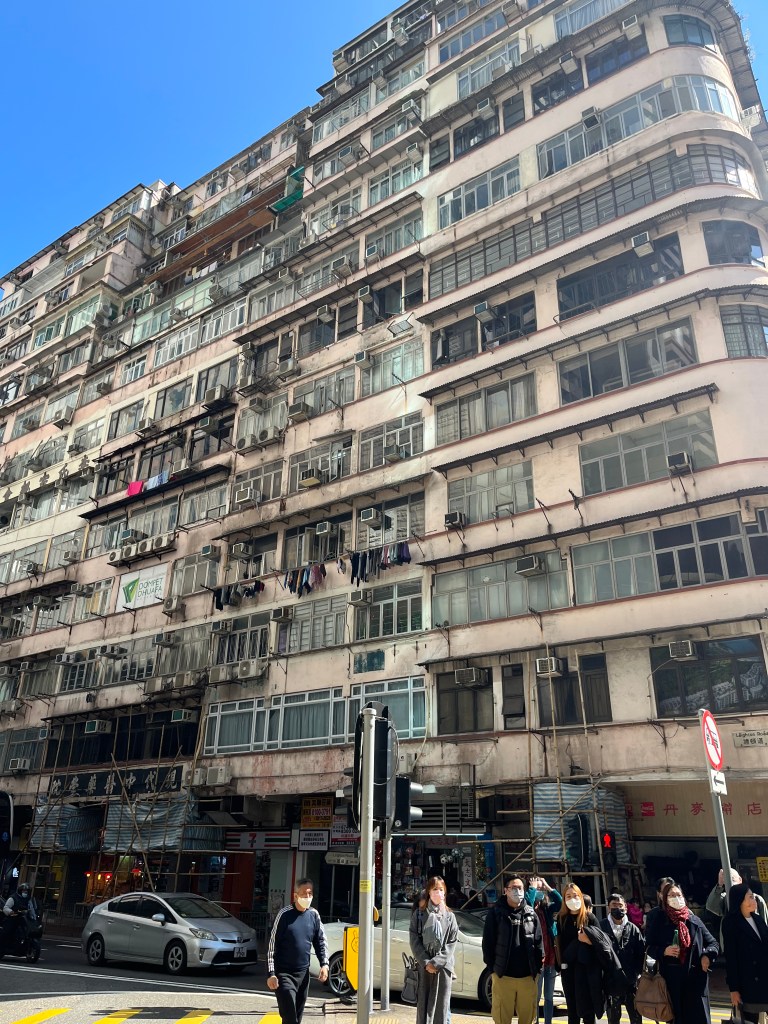
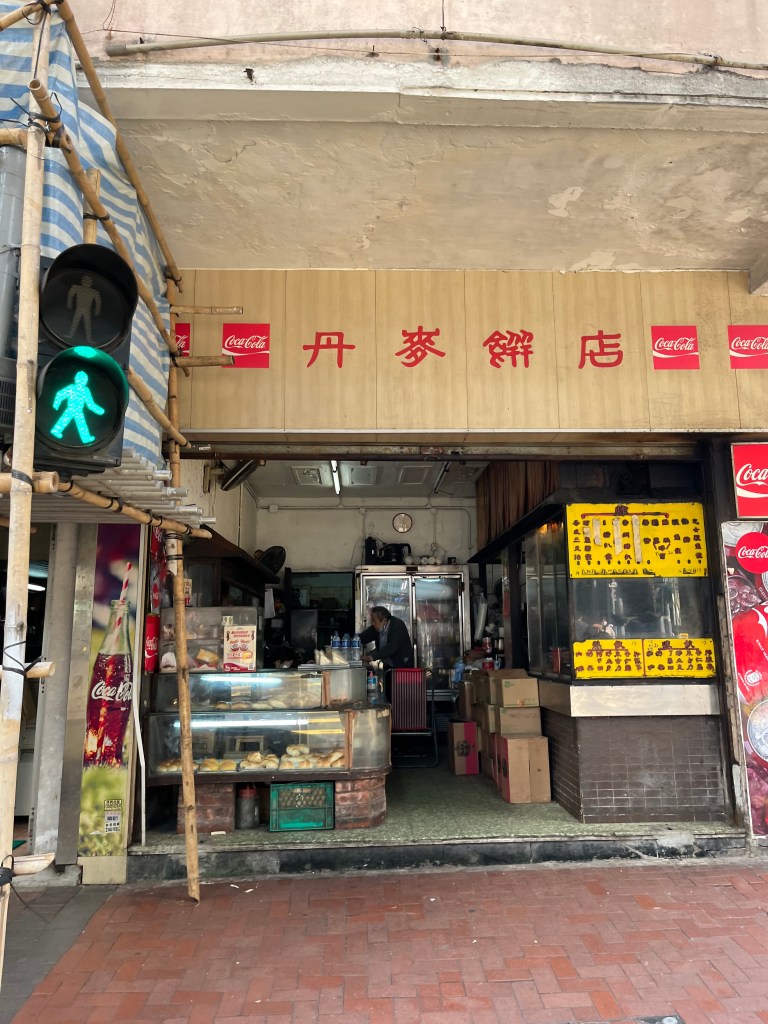
The Danish Bakery 丹麥餅店, 2022
This Danish Bakery has withstood what seems to be endless changes of Hong Kong. Tucked away in the commercialized streets of Causeway Bay, next to high-rises and the newest restaurants, sits this bakery that sells Hong Kong style pineapple buns, sausage rolls and egg tarts. In this sense, it is really not Danish nor truly just a bakery. Yet it is an institution that has remained in this same location, un-renovated and un-changed for decades.
Growing up in Hong Kong without extensive means, sharing food was always the expectation for my family. On special occasions, my grandparents would buy one large piece of fried chicken to split among the three siblings. For my then teenage Dad, two or three bites would be the summation of his experience with the bakery.
I always think of my father as a un-defeatable individual- the post retirement startup founder, family drama mediator and the two time major surgery survivor. When life presents the short straws, Dad seems to always hold sturdy.
Now, more than 40 years since his first trip to the Danish Bakery, I stood in front of the store. I wondered what his younger self imagined when glancing through the slight tints of the confectionary filled shelves.
What were his hopes for himself in these moments? What were his fears? Could he ever conceivably imagine that I would be at Oxford writing about him?
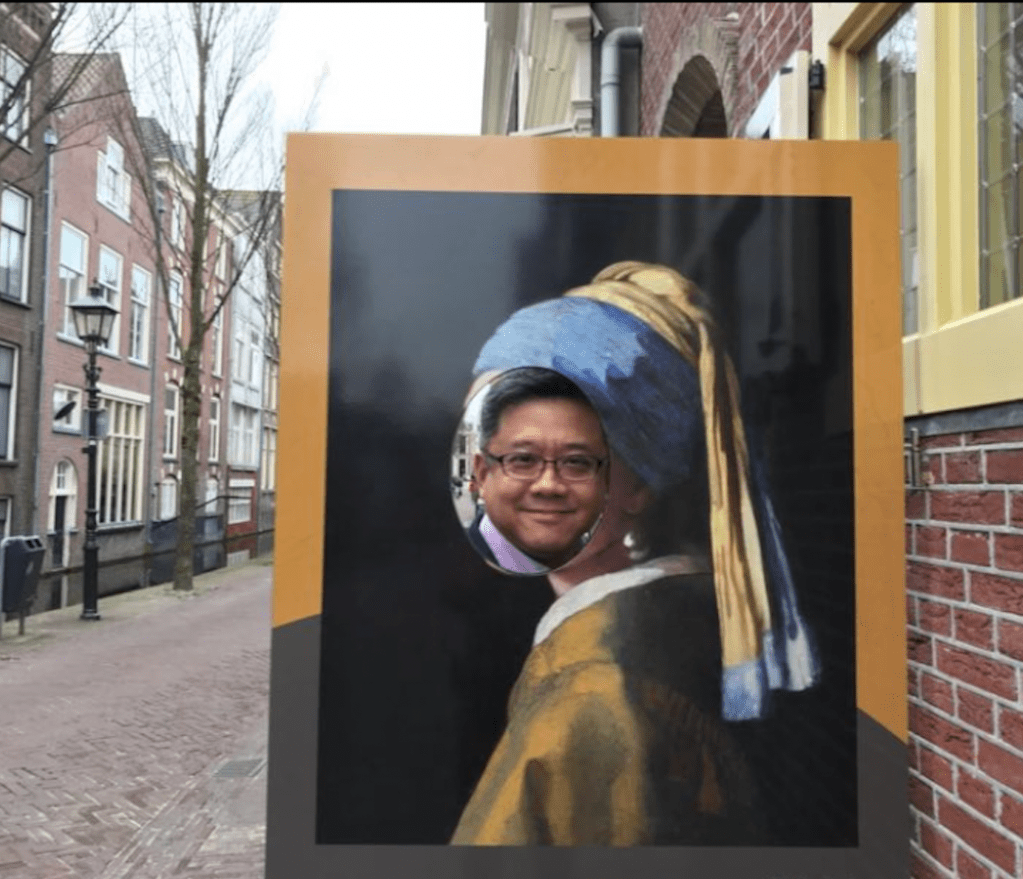

“Dad with a pearl ear ring”, Amsterdam The Bund, Shanghai, 1980s
In many of his memories, Dad would always draw back to this innocuous bakery. Specifically, he’d recount the moments after his first paychecks where he would purposely get an entire piece of fried chicken all for himself. Still now, upon his reflections, he would smile with the glee and joy of a young boy that first imagined the possibilities of the world.
I often struggle to connect the childhood of my parents and myself. Mine were the worlds of after school Disney Channel and academic decadence, while theirs was of labor and pursuing material sustenance. I suppose this cultural disconnect is an inevitability, for the better perhaps, of intergenerational change.
But I still find myself drawn to this age-less bakery.
It still remains some best attempt at imagining my father’s world that is both close yet far- a hope and a wish to hold on to our childhood continuities in a world that is so constantly changing.
 portraits from home